
From SEO Data to Digital Growth: How I Turn Analysis Into Business Action
SEO Strategy • Content Strategy • CRO • Digital Products • Cross-Functional Delivery
Over 15 years in digital publishing, SEO and content, my work has gradually moved from asking “How do we improve this page?” to a much broader question:
“Where is the opportunity, what should we change, and how can that change create value for the user and the business?”
Across Finder, ClickOut Media, Are Media and Red Queen Marketing, I’ve worked with large websites, commercial content and cross-functional teams to identify opportunities using search, content, behavioural and commercial data — and then turn those findings into practical action.
This case study brings together some of the projects that best represent how I work.
The Challenge: Finding the Opportunities That Actually Matter
Large websites rarely have a shortage of things that could be improved.
There may be thousands of declining pages, technical issues, internal-linking gaps, outdated content, conversion friction and new search opportunities.
The difficult part is deciding:
What deserves attention first?
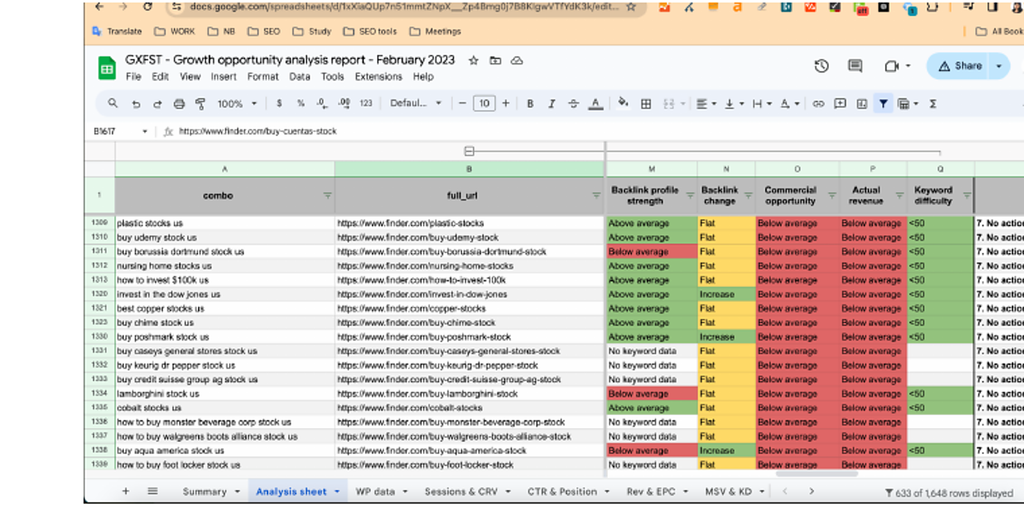
At Finder, I worked on quarterly Growth Opportunity analysis across digital estates typically covering 50,000–80,000 URLs.
Rather than relying on a single metric, I combined multiple signals to understand where optimisation effort could create greater value:
Technical SEO + Search Demand + Traffic + Authority + Audience Behaviour + Commercial Performance
This helped turn a very large dataset into a more practical question:
Where could our next meaningful growth opportunity come from?
01. Turning 50,000–80,000 URLs Into Prioritised Opportunities
My Finder analysis combined enterprise-scale crawling with performance and commercial data.
I used Screaming Frog to evaluate areas including crawlability, indexability, redirects, 404s, hreflang, metadata and internal linking.
I then layered in:
- GA4 sessions and performance data
- Keyword demand and competitive information
- Ahrefs data
- Backlink and referring-domain signals
- Content-level information
- Revenue and commercial inputs from Looker Studio
The purpose wasn’t to create a bigger spreadsheet.
It was to identify which URLs represented the clearest opportunities and what action should happen next.
Connecting SEO With Commercial Performance
One of the most important changes in how I approach SEO has been moving beyond rankings and traffic alone.
At Finder, commercial and revenue information from Looker Studio was incorporated alongside organic-performance data.
That meant an opportunity could be considered not simply because:
“This keyword has high search volume.”
but because:
“There is search demand, this page has an opportunity to improve, and improving this customer journey may have commercial value.”
That creates a very different conversation with the business.
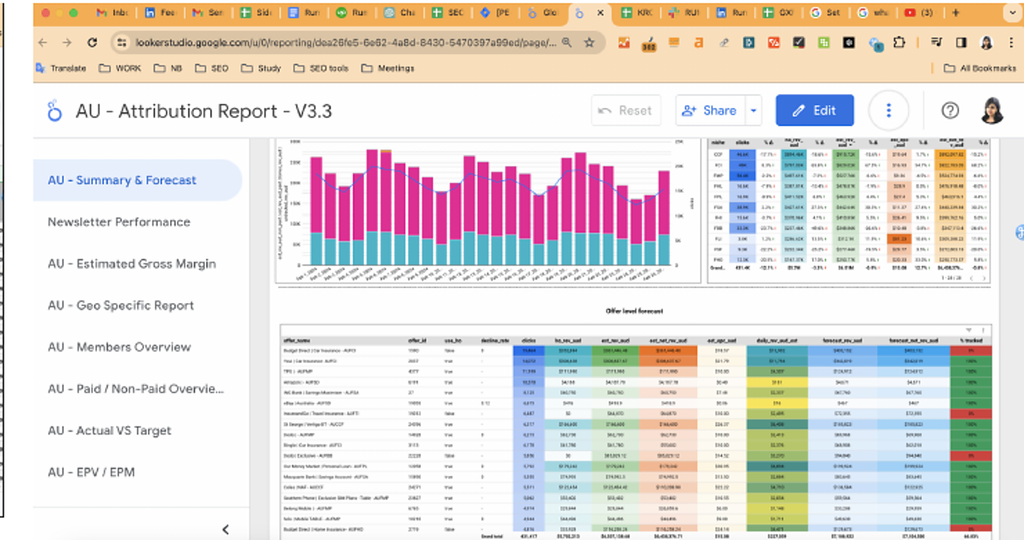
The output became a repeatable quarterly framework connecting technical SEO, organic demand and commercial performance, with recommendations passed to Content teams and followed up after implementation.
02. Moving From Analysis to Implementation
Finding an opportunity doesn’t create growth by itself.
Someone still needs to make it happen.
That became an increasingly important part of my work at ClickOut Media.
Across a multi-site portfolio, I conducted structured analysis covering areas such as:
- Homepage and navigation
- Editorial and commercial templates
- Technical SEO
- E-E-A-T considerations
- Archives
- Plugins
- Performance
- Structured data
- Internal linking
- Commercial journeys
Instead of leaving findings inside an audit document, I identified which issues required action and moved them into a structured delivery process.
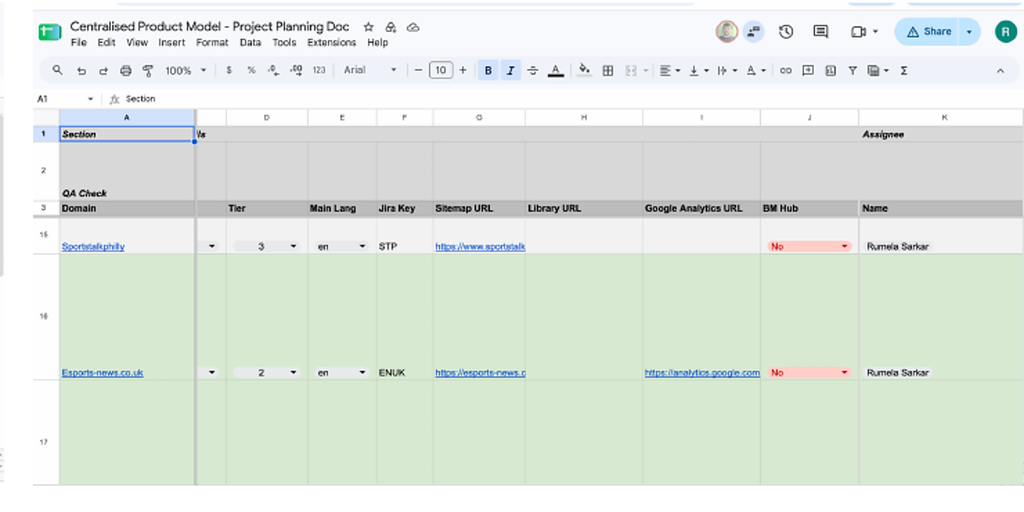
03. Turning Findings Into Jira-Ready Requirements
When development was required, my responsibility extended beyond identifying the issue.
I translated findings into structured Jira tickets with:
Objective → Scope → Safeguards → QA Requirements → Acceptance Criteria
I also used AI-assisted prompt engineering to make requirements reusable for recurring work and suitable for ClickOut’s development workflow.
After implementation, I reviewed and QA’d the changes.
The process became:
AUDIT → PRIORITISE → SPECIFY → IMPLEMENT → QA
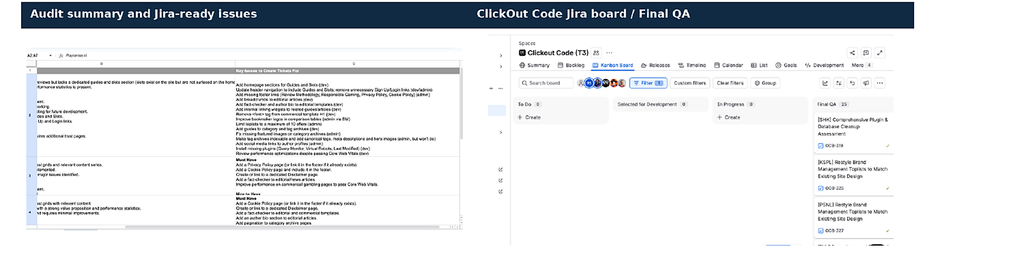
This is an important part of how I work today.
I don’t see an audit as the finished product.
The finished product is the improvement that actually reaches the website.
Your original portfolio documents this process as multi-site audit → prioritisation → Jira specification → ClickOut Code implementation → QA.
04. Improving Site Architecture at Scale
Another example came from my work on ValueWalk.
I performed TIPR-style analysis across a large content inventory to identify contextual internal-linking opportunities.
Rather than adding links indiscriminately, I considered:
- URL and page title
- Content/category relationships
- Page status
- Language
- Topical relevance
- SEO value
- Suitable source and destination pages
Broken or unsuitable URLs were excluded so that recommendations strengthened rather than weakened the architecture.
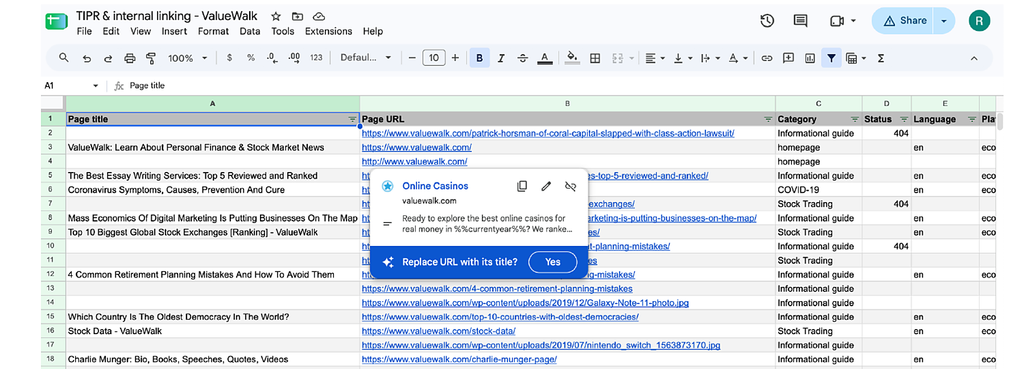
The result was a structured workflow that SEO and Publishing teams could action and validate, rather than a list of arbitrary links.
05. From Traffic to Customer Journey
Over time, my thinking expanded beyond:
How do we get more people to this page?
to:
What happens after they arrive?
That brought SEO closer to CRO, content experience and digital product development.
I’ve worked with developers, content marketers, designers and other stakeholders to develop and improve digital products and commercial components around content.
This has included work around:
- Calls to action
- Commercial top-list experiences
- Quiz experiences
- Navigation
- Internal linking
- Reusable content components
- Commercial page journeys
At Finder, I also worked with behavioural signals and heatmaps to identify friction in commercial experiences, supported CTA and A/B testing initiatives, and used prioritisation frameworks such as ICE and PIE when evaluating opportunities.
Digital-product initiatives I supported with developers and designers at Finder contributed to approximately 4% revenue growth within one month.
At ClickOut, SEO and conversion-focused improvements contributed to approximately 5% growth in traffic and First Time Depositors within three months.
My role wasn’t simply to drive traffic. It was increasingly about connecting acquisition with what users did next.
For those two percentages, I’d keep “contributed to” exactly as written unless you have attribution data demonstrating that your individual changes directly caused the increases.
06. Content Strategy Starts With Audience Demand
Not all growth opportunities require technical changes.
At Red Queen Marketing, I worked directly with the founder on content growth across Australian businesses.
My work included:
Keyword research → Competitor analysis → Content gaps → Topic pipelines → Writer briefs → Content → Digital PR → CRO
Instead of treating keyword research as a collection of search terms, I looked at what audiences were searching for, what competitors were covering and where there was room for the brand to offer something useful.
I then translated those findings into practical content opportunities and briefs.
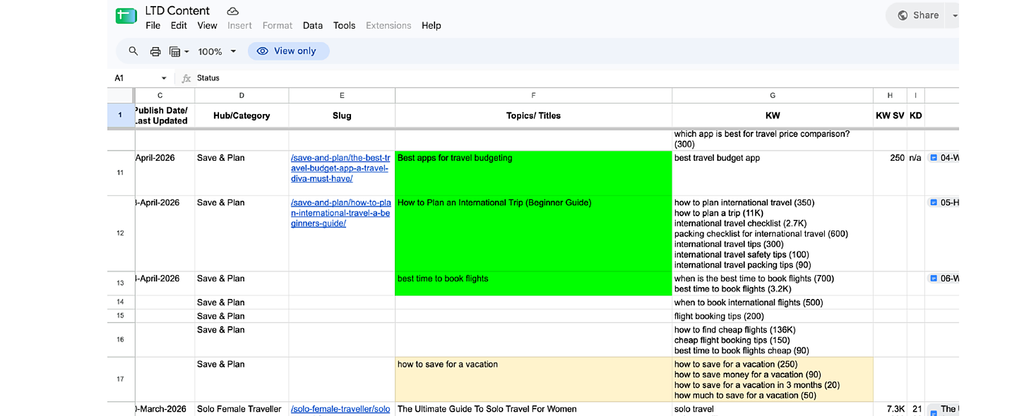
My work included researching new topics and search intent, analysing competitor coverage and gaps, building future content pipelines and creating briefs for writers. I also ghostwrote selected articles before Publisher review and publication.
07. Building Systems, Not Just One-Off Fixes
Another lesson from working across large portfolios is that solving the same problem manually on every website isn’t scalable.
At ClickOut, I created reusable systems including:
SEO and commercial shortcode documentation
Reusable Jira requirements
AI-assisted implementation prompts
QA checklists
Acceptance criteria
Cross-site implementation workflows
The aim was to make repeatable work easier to execute consistently while still keeping human review and QA in the process.
My portfolio includes examples of reusable workflows for responsive changes, footer improvements, translation support and other recurring multi-site requirements.
The Outcome: A Different Way of Thinking About SEO
Across these projects, the tools and websites changed.
The underlying process didn’t.
1. Understand the audience and business objective
2. Analyse search, content, technical, behavioural and commercial data
3. Identify the opportunity or friction
4. Prioritise what matters
5. Turn the finding into a content, CRO, SEO or product solution
6. Collaborate with Content, Marketing, Product, Design and Development
7. Implement and QA
8. Measure, learn and iterate
This is the area of digital growth I enjoy most:
SEO + Content + Behaviour + CRO + Product + Commercial Growth
SEO can bring someone to a website.
Content gives them a reason to stay.
A strong customer journey helps them decide what to do next.
What I Bring to a Team
After 15 years across digital publishing, team leadership, SEO, content and growth, I bring a combination of hands-on execution and strategic thinking.
I can work inside a spreadsheet containing tens of thousands of URLs, investigate why a commercial journey isn’t working, develop a content opportunity, write an implementation-ready Jira ticket, collaborate with developers and designers, and return after launch to QA what was actually delivered.
And increasingly, the question I ask isn’t:
“Did we finish the SEO task?”
It’s:
“Did we make the experience better – and did it create value for the audience and the business?”
Interested in my experience?
I bring 15 years of experience across SEO, content strategy, digital publishing, CRO and digital growth, working with international businesses including Finder, ClickOut Media, Are Media and Red Queen Marketing.